
When your air conditioner quits in July, replacing it feels both urgent and expensive. The reality sits somewhere in between. A new AC system for a typical Hill Country home can run anywhere from about $7,400 on the low end to nearly $29,000 for a large or high-efficiency setup, depending on your home’s size, the system you choose, and your current equipment. What most homeowners don’t realize is that financing can spread that cost over 72 months at 0% interest, and that timing the replacement strategically can save thousands. This guide breaks down what you’ll actually pay, why prices vary, and how to avoid overpaying.
What Drives the Cost of an AC Replacement
A handful of practical factors set the price of a new air conditioning system.
Home size matters most. A 2,000-square-foot home needs a different capacity than a 3,500-square-foot one. HVAC contractors measure that capacity in tons, so you’ll hear a system described as three-ton, four-ton, and so on. An undersized unit runs constantly and still struggles to cool, while an oversized one cycles on and off, wastes energy, and wears out faster. Getting the right size is the first step, and it usually calls for a professional load calculation that belongs in any legitimate replacement quote.
System type shapes the price range. A basic split-system air conditioner, meaning the outdoor condenser and indoor air handler you see on most homes, costs less than a high-efficiency variable-speed model or a ductless mini-split. Ductless systems suit room additions or homes without existing ductwork, though they cost more upfront. The American Standard units we install at Hill Country AC Heating Plumbing span a range of efficiencies and prices, so we can match the system to your budget and cooling needs.
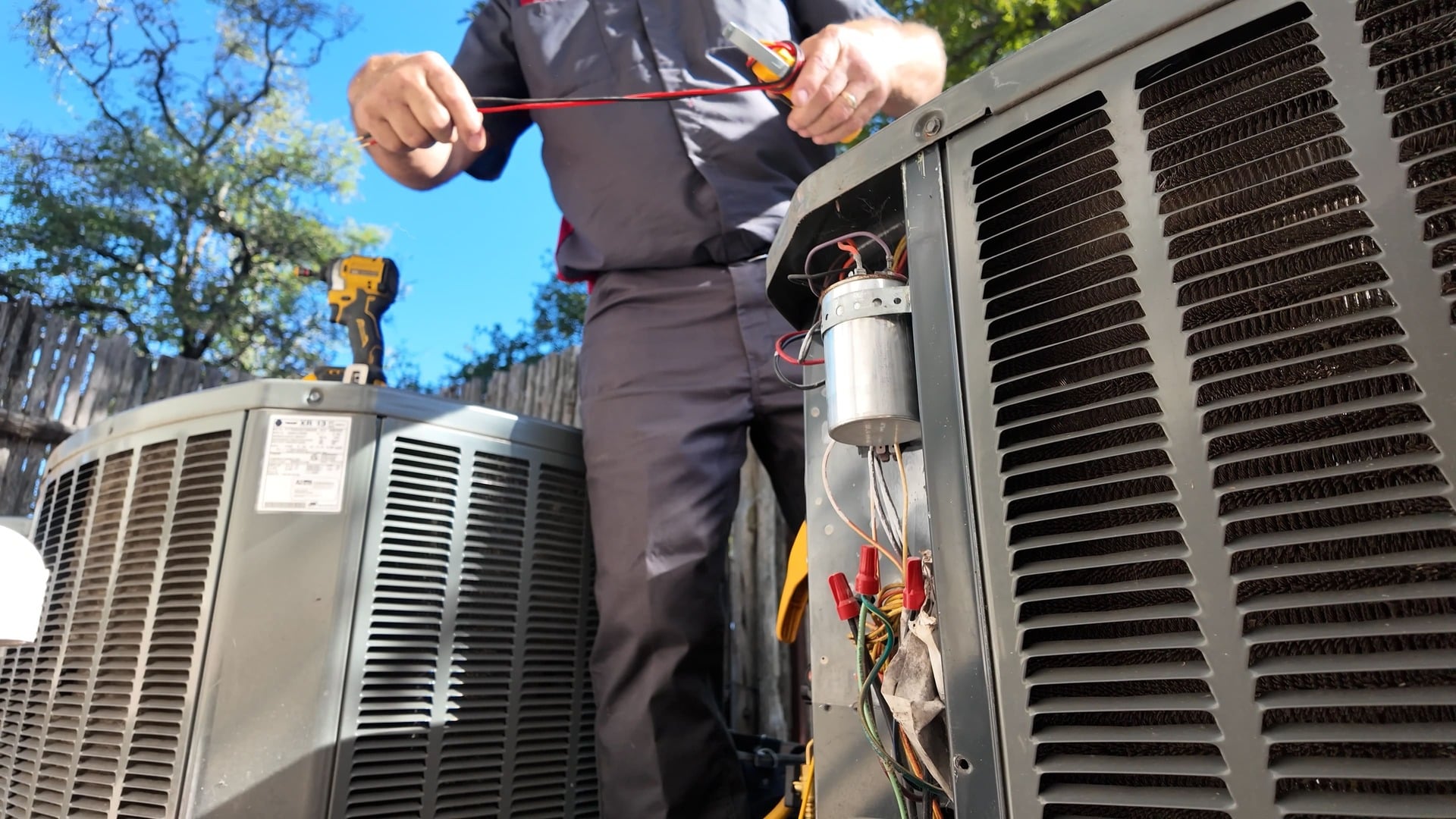
Installation labor is significant. A proper replacement takes hours of skilled, hands-on work. Federal law requires the technician to recover and properly dispose of refrigerant from your old system before removing the equipment, running new refrigerant lines where needed, setting the new condenser and handler, testing airflow, and commissioning the system. A straightforward replacement in an accessible spot might take four to six hours. A more complex job runs longer and costs more, whether that means upgrading ductwork, relocating the outdoor unit, or working around slab-leak complications.
Existing ductwork affects the final bill. If your ducts are in good shape, the labor stays focused on the new equipment. If they’re leaking, undersized, or in need of sealing before a new system goes in, that adds to the project cost. Plenty of homes in Fredericksburg, Kerrville, Ingram, Mason, Stonewall, and Willow City are older, and their ductwork benefits from a professional inspection and sealing before an AC upgrade.
How Much Does It Cost to Replace an AC in the Hill Country?
The exact cost to install or replace an AC system depends on several factors, but most Hill Country homeowners land in a predictable range. On the low end, a basic replacement runs around $7,415. The average project comes in closer to $17,504, while a larger home or a high-efficiency, variable-speed system can reach $28,719 or more. Each of those figures covers the unit, labor, refrigerant, startup, and testing for a straightforward removal and replacement where your existing pad and connections can be reused.
These numbers are estimates, and your final price can shift depending on permitting, duct modifications, electrical updates, efficiency ratings, and overall installation complexity. The most accurate way to understand your options is a custom in-home estimate, which you can schedule by calling (830) 362-1142.
- Better availability. You book the date that works for you instead of whatever slot opens up in an emergency.
- Time to compare quotes. Without the crisis pressure, you can get a free second opinion, weigh equipment options, and understand financing before you commit.
- Cooler working conditions. A faster install means less time with your home open, and technicians do their best work when they’re not overheated.
- Seasonal rebates and promotions. AC companies often load incentives into early summer. Right now, Hill Country AC Heating Plumbing is offering $2,000 off select new HVAC systems, plus free installation of a Germicidal UV Light and Whole-Home Air Purifier with qualifying purchases.
How Financing Spreads Out the Cost
The upfront price is one of the main reasons homeowners delay an AC replacement. Financing changes that equation.
Hill Country AC Heating Plumbing offers 0% financing for 72 months on HVAC services with approved credit. An average $17,500 system then spreads to roughly $243 per month with no interest charges. For many homeowners, that lands close to a single peak-season electric bill, and it beats running a failing AC at half its efficiency.
Even if your budget could absorb the full price, financing can still be the smart move. If your current system is 12 years or older, it’s likely running at a 10 to 12 SEER rating, short for Seasonal Energy Efficiency Ratio. A modern system runs at 16 to 18 SEER or higher, and the energy savings take a real bite out of the monthly payment. Over the life of a 72-month loan, a high-efficiency replacement can cut your cooling costs by 20 to 40 percent. The full terms are spelled out in our financing options, and you can ask about them when you call (830) 362-1142.
What Happens During an AC Replacement
A professional AC replacement usually unfolds in a clear sequence.
First, the technician performs a load calculation and inspects your existing ducts, electrical panel, and condenser pad. This determines the size and type of system that will work best and flags any prep work. You then get a detailed quote that breaks down equipment, labor, and any added work.
On installation day, the old system is carefully disconnected. Refrigerant is recovered and disposed of under EPA standards, since venting it is illegal. The old outdoor unit and any old indoor equipment come out next.
The new system is positioned or repositioned as needed, refrigerant lines are run or reconnected, the thermostat is wired, and the system is charged with the correct amount of refrigerant. The technician tests cooling, airflow, and electrical connections, then walks you through how everything works. Many modern units pair with smart thermostats, letting you control the temperature from your phone.
The whole process usually takes a single day for a straightforward replacement. If ductwork needs sealing or your electrical panel needs an upgrade, the job may span two visits.
Repair or Replace: Why a Free Second Opinion Pays Off
Before committing to any AC replacement, it’s worth getting a professional second opinion. Sometimes a system can be repaired for a fraction of replacement cost. Other times, a repair is just the last expense you’ll sink into a failing unit, and replacing it saves money over the next few years.
Hill Country AC Heating Plumbing offers a free second opinion on any service, repair, or replacement. We’ll inspect your system, run diagnostics, and tell you honestly whether repair or replacement makes more sense for your situation. You can schedule by calling (830) 362-1142 or by reading how our AC replacement service works.
Frequently Asked Questions About AC Replacement
How long does a new AC system last? A well-maintained air conditioning system usually runs 15 to 20 years. Routine maintenance helps you avoid breakdowns and stretch that lifespan, which is part of what the Shield Membership plan covers. Most of the systems we replace are between 10 and 18 years old.
What’s the difference between a split system and a mini-split? A split system has an outdoor condenser connected to indoor ductwork that distributes cooled air throughout your home. A ductless mini-split connects an outdoor unit to a small wall-mounted head serving one room or zone. Mini-splits work well for room additions, finished spaces, or homes without ducts, while split systems are standard and usually less expensive for whole-home cooling.
Will a new AC system reduce my electric bill? Yes, noticeably. If your current system is over 10 years old, a new high-efficiency unit can cut cooling costs by 20 to 40 percent. Across a year, that savings can reach $500 to $1,000 depending on your usage and local energy rates, and it keeps adding up across the system’s 15-to-20-year life.
Do I need to replace my furnace if I replace my AC? Not necessarily. Your air conditioner and furnace are separate systems, so if your furnace is working well, you can replace the AC on its own. If both are aging, though, replacing them as a matched set often delivers better efficiency and lets you upgrade the thermostat and controls at the same time. Ask your technician during the free second opinion.
What’s the Shield Membership plan? The optional Shield Membership Protection Plan bundles priority service, discounted repairs, and routine maintenance visits to help you budget for HVAC care and avoid surprise breakdowns.
Plan Your Replacement Before the Heat Hits
Your air conditioner will fail eventually. The real question is whether you replace it on your own timeline or on an emergency schedule in the middle of July. Acting now means better pricing, faster scheduling, and time to weigh your options and financing.
Hill Country AC Heating Plumbing has served the Hill Country since 1974. We’re licensed in HVAC and proudly serve Fredericksburg, Kerrville, Ingram, Mason, Stonewall, and Willow City.
Ready to explore your options? Call (830) 362-1142 for a free estimate and second opinion. Our AC installation and replacement page covers the full process along with current offers, including $2,000 off select systems and 0% financing for 72 months.